Correcting Credit Report Inaccuracies
A late payment you made on time, an account you don't recognize, a balance that doesn't match — these errors may be affecting your credit. Let's look at what can be challenged. See what the lenders see.
Your report may show a payment as late even though you paid on time, a balance that doesn't match your records, or an account you don't recognize. You might also find duplicate entries, wrong account statuses, or information that looks out of date. Those reporting problems shape how lenders and other authorized parties see your financial history.
El Paso Credit Repair helps you work out what may be inaccurate and how to address it. We prepare clear, specific disputes that name the information in question and explain why it may be wrong. We don't claim every negative entry can be removed — accurate negative entries generally stay, and you should understand that distinction before going further.
El Paso credit files carry the same errors as anywhere else: a balance that doesn't match your records, a late payment you actually made on time, one collection reported twice, an account belonging to someone with a similar name. Every dispute we prepare names the specific problem and the evidence behind it — a factual dispute starts with facts, not a form letter.
These are actual results from past clients, previously shared on Instagram. Every credit file is different, so treat these as examples of what the process can look like, not as a promise of what yours will do.

A client walked into a dealership with nothing down and drove out in a brand-new Lexus in July 2020.
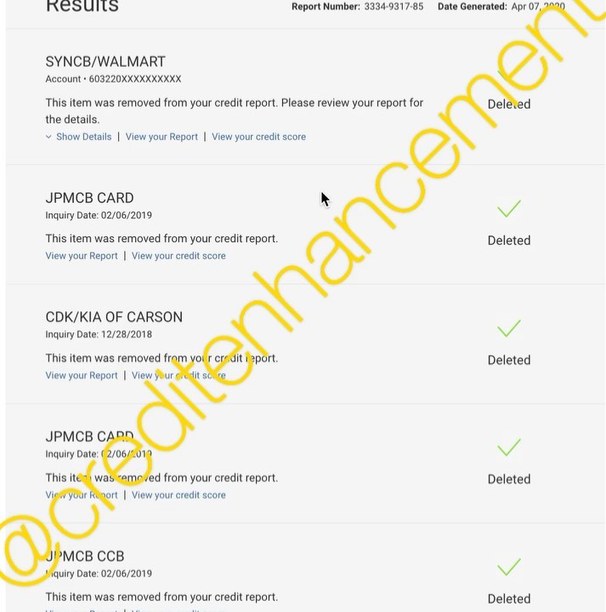
Five items — a store card account and four hard inquiries — were deleted from a client's Experian report in April 2020.
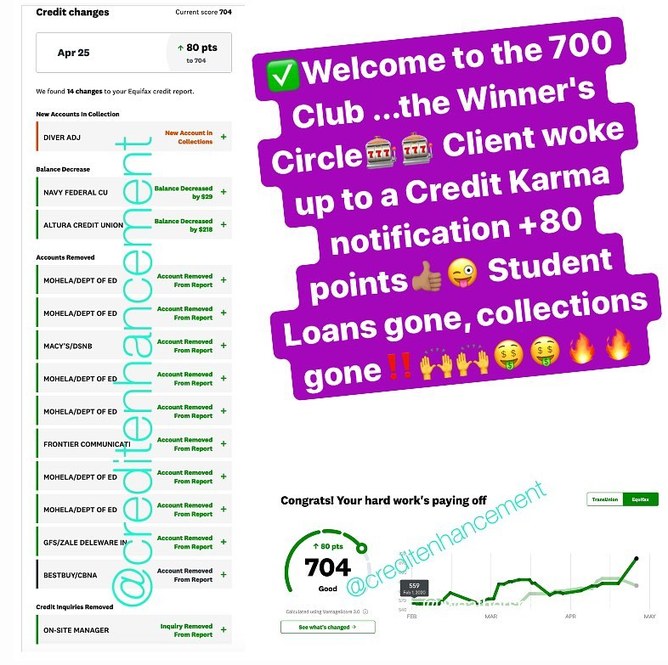
Equifax score up 80 points to 704, with six MOHELA student loan accounts and other entries removed, April 2020.
Results vary from person to person and depend on what is in each credit file. Nothing here promises a particular score increase or deletion.
A late payment you know was on time, an account that isn't yours, a balance that doesn't match what you owe — mistakes like these stay on your reports until someone reads them. One dollar opens all three bureaus' reports so you can read them yourself and see what's actually there.
The first step is seeing it yourself. The challenge comes after.
MyScoreIQ opens a week of score access for $1. The price from then on is $34.99 a month. Stop anytime.
Not every negative entry can be disputed. A dispute should target information that is inaccurate, incomplete, unfamiliar, or unsupported. These are the concerns that come up most.
Names, addresses, employment details, or other personal information that appears incorrectly on a report.
How to review accounts you don't recognize and work out whether an entry is a reporting error or an identity concern.
Reported late payments and account statuses, checked for details that don't match your records.
Accounts that appear more than once, which can skew reported balances and your overall profile.
How old or incomplete entries are reported, and whether the information meets the applicable reporting standards.
A dispute works best when it names the exact information being challenged and explains why it may be wrong.
We stick to legitimate reporting concerns — we don't suggest every negative entry can be removed.
We walk through how to respond after a dispute and what extra information may help.
We start with the entries that concern you and the details in your credit reports.
We flag information that looks inaccurate, incomplete, or inconsistent with your records.
We prepare a specific dispute that names the information in question and explains the concern.
We go over how to read responses from the reporting agencies and what steps may come next.
A dispute should target information that looks inaccurate, incomplete, or unsupported. Accurate negative information generally cannot be removed through a legitimate dispute.
Supporting documents can strengthen a dispute, but the key is naming the specific information in question and explaining why it may be wrong. Our team can talk through what may be useful.
It depends on the reporting agency, the information provider, and how complex the concern is. We don't promise a particular timeline.
Yes — consumers can dispute inaccurate information directly with the credit reporting agencies. Some people prefer guidance when putting together a clear, specific dispute.
Let's take a closer look together and find out. Call (915) 205-6080.