Identity Theft
Someone Else Opened the Account. You Should Not Carry It.
An account you never opened, a card you never held, a loan you never signed for — identity theft leaves entries on your report that are not yours, and they can block everything you apply for. We help you sort the real accounts from the stolen ones and challenge what is not yours. See what the lenders see.
Identity theft on a credit report usually looks like accounts you do not recognize: a credit card opened in your name, a loan you never took, an address you never lived at. In a border city like El Paso, where families move often and paperwork crosses hands and offices, a stolen identity can travel far before anyone notices — sometimes the first sign is a denial letter for something you never applied for.
There is a specific lane in federal law for this. Under section 605B of the Fair Credit Reporting Act, a bureau must block fraudulent information when you provide an identity theft report — a police report or an FTC identity theft report — along with proof of your identity and a list of the items that are not yours. El Paso Credit Repair helps you put that package together: matching each fraudulent item to the report, gathering the right documents, and sending the request to the right bureau. This is a process with rules and paperwork, not a promise — but when the items are genuinely not yours and the paperwork is in order, the law is on your side.
The first step is always the same: know exactly what the bureaus are showing, account by account, so the real accounts and the stolen ones are never mixed up.
These are actual results from past clients, previously shared on Instagram. Every credit file is different, so treat these as examples of what the process can look like, not as a promise of what yours will do.
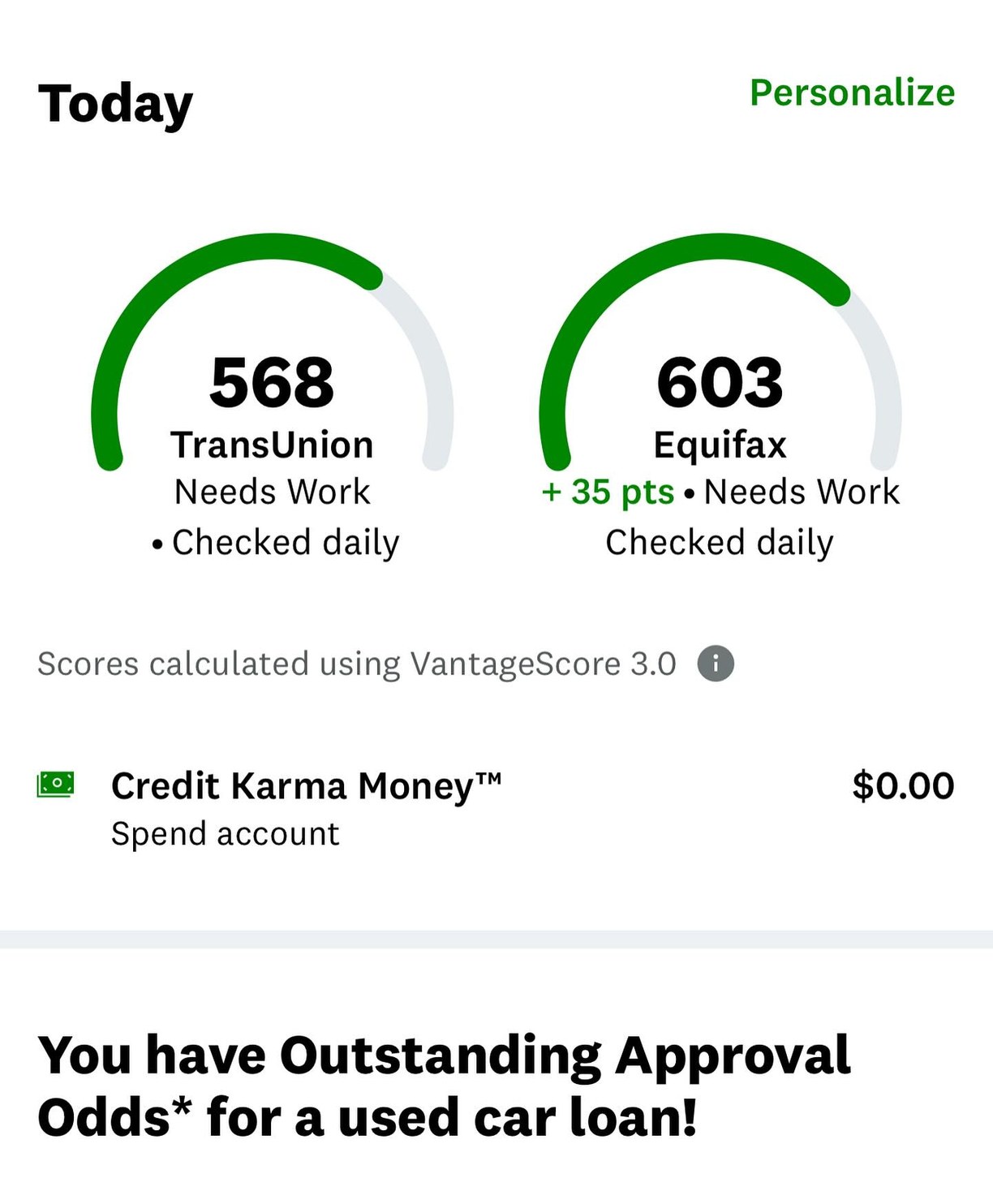
One account deletion took this client's Equifax score up 35 points, to 603, in February 2024. The same file was already showing approval odds for a used car loan.
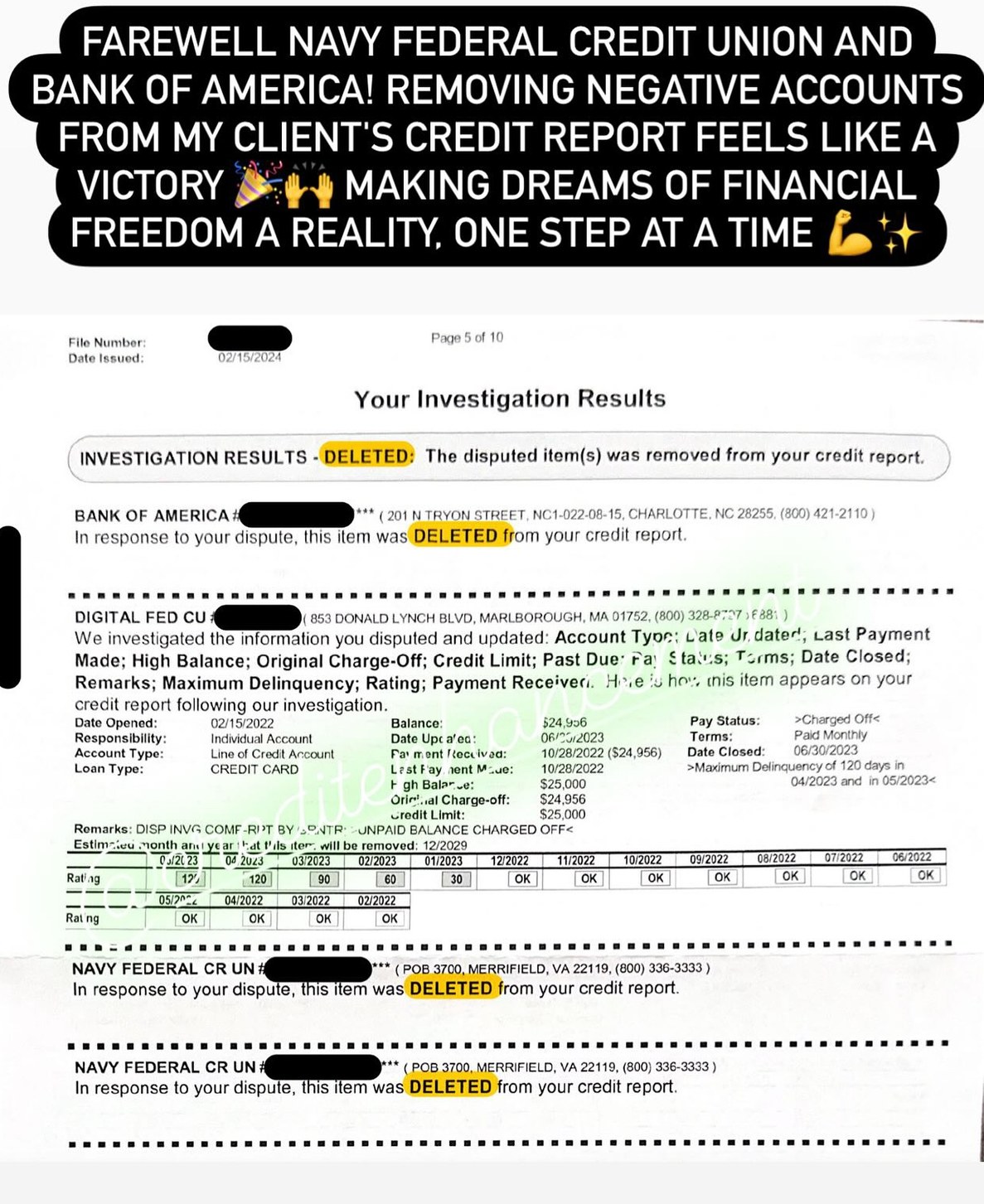
A February 2024 bureau investigation letter showing a Bank of America account and two Navy Federal accounts deleted from a client's credit report after dispute.
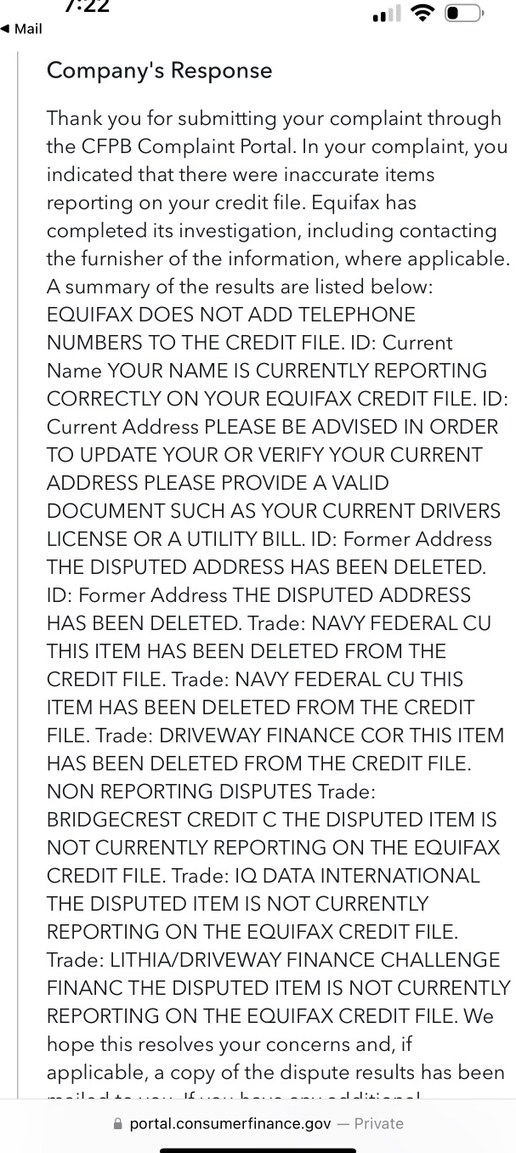
Equifax deleted two Navy Federal accounts and a Driveway Finance account after a CFPB complaint, March 2024.
Results vary from person to person and depend on what is in each credit file. Nothing here promises a particular score increase or deletion.
You cannot challenge a stolen account you have not seen. One dollar opens all three reports — Equifax, Experian, TransUnion — so you can read every account yourself, with the creditors and dates in front of you, and pick out the ones that are not yours.
The entry on the page is the fact. Everything else is guessing.
$1 with MyScoreIQ gets you a week with your scores. Keeping it on costs $34.99 a month — cancel whenever you like.
Identity theft cases run on matching and paperwork. We help you line up each stolen item with the proof that it is not yours.
Each unfamiliar account, matched to the bureau, the creditor, and the dates shown on the report.
How a police report or an FTC identity theft report works, and what it needs to cover for each item.
The identification documents the bureaus ask for, and how to keep copies organized.
How the request to block fraudulent information is put together, item by item, for each bureau.
How to keep records of every request, and what to consider while the bureaus review the case.
A stolen account needs a different response than a real account you forgot about. We sort that out first.
We help you separate the accounts that are genuinely not yours from the ones that are — and challenge only what the evidence supports.
Common identity theft terms, explained — and help preparing for conversations with a bureau, a creditor, or law enforcement.
We go over all three reports with you and mark each account that is not yours.
We help you list the identity theft report and identification documents each bureau asks for.
We match each fraudulent item to the report and the documents that cover it.
We lay out how the blocking request is sent and what to expect while it is reviewed.
Section 605B of the Fair Credit Reporting Act says a bureau must block information that results from identity theft when you provide an identity theft report, proof of your identity, and a list of the items that are not yours.
A police report about the identity theft, or an identity theft report filed with the Federal Trade Commission, generally counts. The report should cover the items you are asking to be blocked.
A police report is one of the two usual forms of an identity theft report. We can talk through which option fits your situation and what each bureau asks for.
Only the items that are genuinely not yours should be included in the request. We help you go account by account so real accounts are never mixed in with stolen ones.
Let's review your reports together. Call (915) 205-6080.