Repossessions
A Repossession Can Haunt Every Application After It
Losing a vehicle is hard enough. The repossession entry that follows can block your next car, your next apartment, and your next loan for years. We help you read the entry closely and challenge it when the details do not add up. See what the lenders see.
A repossession entry on a credit report usually means a lender took back a vehicle after payments fell behind — and it is one of the heaviest entries a file can carry. Lenders see it and think risk. Apartment managers see it and think twice. It can sit on a report for years, and in a city built around driving like El Paso, that weight is felt every time you need wheels to get to work on the Westside, the Eastside, or out toward Horizon City.
El Paso Credit Repair goes through the repossession entry with you line by line: the creditor, the dates, the balance shown after the vehicle was sold, and whether the same account tells the same story at all three bureaus. A deficiency balance that does not match the sale, a date that is wrong, or an account that was settled but still shows as open — those are accuracy questions, and accuracy questions can be disputed. An accurate repossession generally stays for the full reporting period, and no one can promise it will come off.
In the El Paso area, a repossession often follows a rough stretch — a job loss, a deployment, a family emergency that swallowed a few paychecks. Whatever put the account behind, the work now is the same: understand exactly what the bureaus are reporting, and challenge what does not match your records.
These are actual results from past clients, previously shared on Instagram. Every credit file is different, so treat these as examples of what the process can look like, not as a promise of what yours will do.
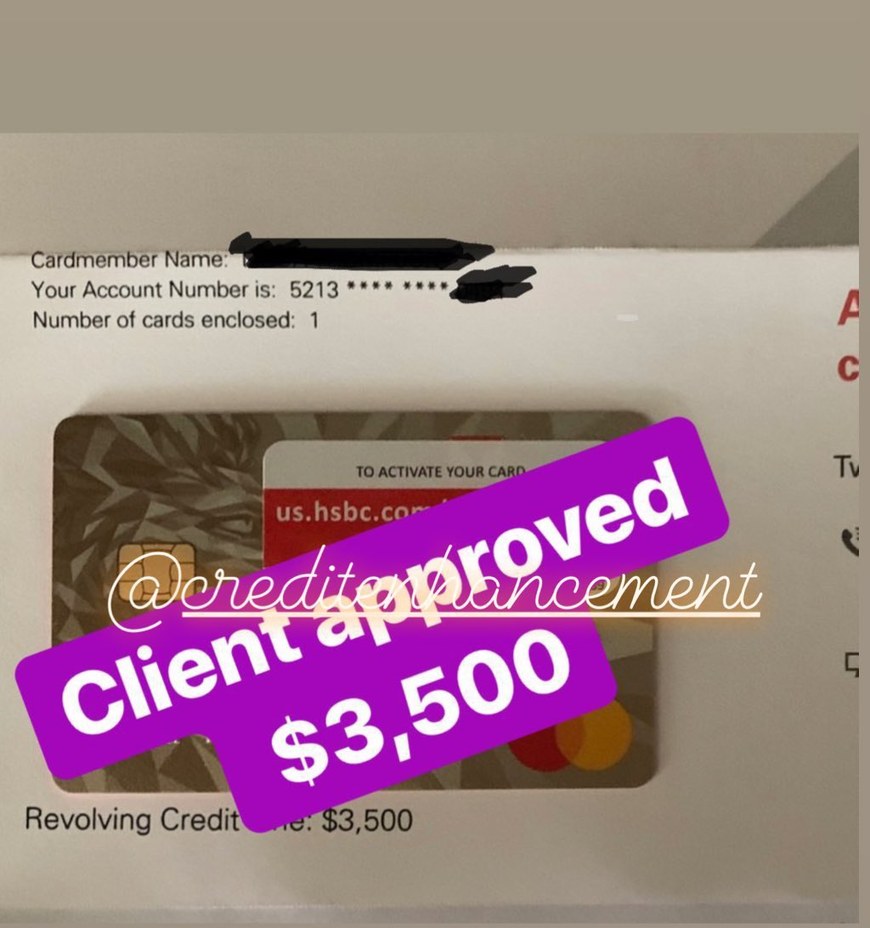
Client approved for an HSBC card with a revolving credit line of 3,500 dollars, June 2019.
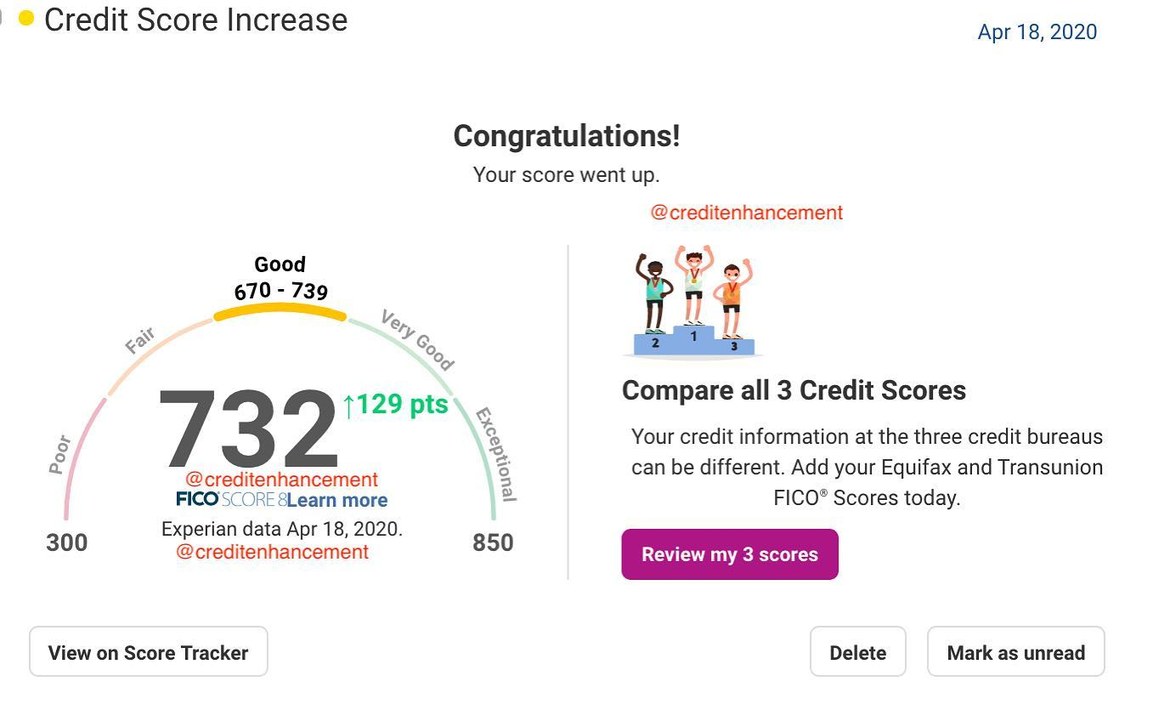
A client's Experian FICO score rose 129 points to 732 in April 2020.
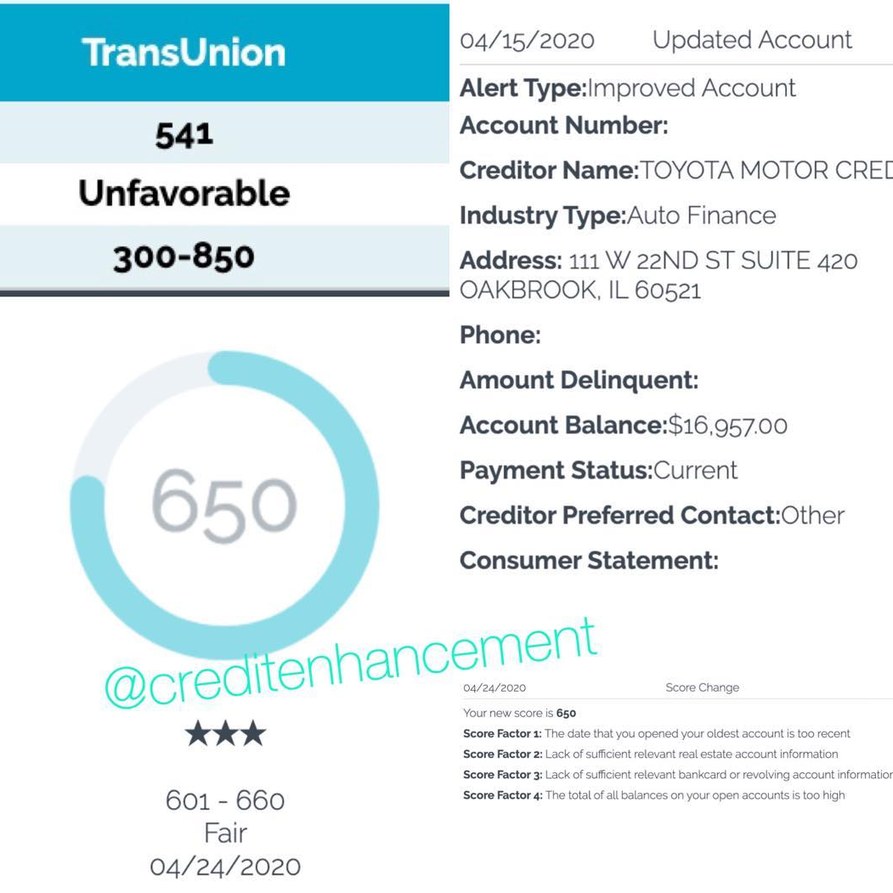
A client’s TransUnion score rose from 541 to 650 in April 2020, a 109-point increase in 20 days, after TransUnion audited the file.
Results vary from person to person and depend on what is in each credit file. Nothing here promises a particular score increase or deletion.
A repossession entry hides a lot of detail — the balance, the dates, the status after the sale. One dollar opens all three reports — Equifax, Experian, TransUnion — so you can read the entry yourself before deciding what to do about it.
The entry on the page is the fact. Everything else is guessing.
$1 with MyScoreIQ gets you a week with your scores. Keeping it on costs $34.99 a month — cancel whenever you like.
A repossession entry has several moving parts. We help you check each one against your records.
The creditor, the date of the repossession, and how the account is described on each bureau's report.
The deficiency balance shown after the vehicle was sold, and whether it matches the lender's own numbers.
Whether the account shows as closed, settled, or still open, and whether the dates line up with your paperwork.
Whether the entry holds inaccurate information that may be worth disputing with the bureau or the furnisher.
How to keep records of the sale and any settlement, and what to consider before your next vehicle application.
A balance that does not match the sale paperwork needs a different response than a correct entry. We sort that out first.
We look for information that is actually inaccurate — we do not suggest every repossession entry can be removed.
Common auto-loan and repossession terms, explained — and help preparing for conversations with a lender.
We go over the repossession entries on your credit reports together.
We check the creditor, balance, dates, and status against your paperwork.
We flag information that looks inaccurate, incomplete, or inconsistent with your records.
We lay out possible dispute options and practical steps toward your next vehicle.
A repossession with inaccurate information — a wrong balance, wrong dates, or a status that does not match the lender's records — can be challenged through a factual dispute. An accurate repossession generally stays on the report for the full reporting period.
A repossession is generally reported for up to seven years from the date of the first missed payment that led to it. The exact timing depends on the account and the bureau's reporting rules.
After a repossessed vehicle is sold, the amount still owed — the loan balance minus the sale price, plus any allowed fees — is called a deficiency balance. It may be reported separately, and its accuracy is worth checking.
Many people do, though the terms may be harder. Knowing exactly what the entry says, and challenging any inaccuracy in it, puts you in a stronger position before you apply.
Let's review your reports together. Call (915) 205-6080.